Showing posts with label Books. Show all posts

Thursday, May 14, 2015

Stairways to Heaven


In pursuit of quality titles for my summer reading list, I stumbled upon image after image of book staircases.  Imagine!  Given that the average staircase has 12 steps, as of today, my imaginary staircase would sport these titles (in alphabetical order):  Beloved, Jane Eyre, Lolita, The Age of Innocence, The Awakening, The Bell Jar, The Color Purple, The Great Gatsby, The Handmaid's Tale, The Joy Luck Club, The Scarlet Letter, and The Sound and the Fury.  

If you really want to decorate your staircase thusly, here is a site that promises to help you duplicate any book spine for just $12 a riser.

Which 12 books would you choose for your own stairway to heaven?


Monday, April 6, 2015

A Winner in My Book


I woke up tired yesterday morning. Happy, but tired. I’d stayed up much too late finishing a good book, and I know you understand how much fun that can be. Which book, you ask? None other than Anthony Doerr’s All the Light We Cannot See, which rightfully placed as a 2014 National Book Award Finalist.

What can I say about this marvel? I was captivated from page one, although I was ready not to be. The story of a blind girl. The story of a Nazi radio whiz. Show me, I thought, in deference to living in the stubborn state of Missouri. Show me how to make that sort of story, those sorts of characters, work.


Hats off to you, Mr. Doerr. Your book has indeed impressed this writer. The book starts at a fast clip and gallops along until the end. Short, tense, lovely chapters. Intriguing, well-portrayed characters. A good dose of history, too – the book details the post-D-day bombing of St.-Malo, France, and the beginning of the end of WWII. What’s not to love? I suggest you delve into this wonder as soon as you can. Even if you lose a little sleep, I bet you’ll be glad you did.


Monday, January 12, 2015

Fictitious Dishes

Some of my favorite book scenes involve characters sitting down to a meal.  Remember Leopold Bloom’s kidney breakfast in James Joyce’s Ulysses?  Or how about Esther Greenwood’s famous crab stuffed avocado lunch in Sylvia Plath’s The Bell Jar?  Don’t get me started on all of the apple pie, ice cream, and coffee in Jack Kerouac’s On the Road, or the decadent party bites featured in F. Scott Fitzgerals’s The Great Gatsby. 

Dinah Fried put together a spectacular book, Fictitious Dishes:  An Album of Literature’s Most Memorable Meals (HarperCollins), showcasing her own photos based on said famous meals.  Fried, a designer, art director, and graduate of Rhode Island School of Design, has done a glorious job of visually representing these fictitious meals.  Check out the book’s website and pick your favorite among the sample photos displayed on her page.  Better yet, order the book as part of your coffee table collection.

My favorite?  At least today, I’m salivating over Holden Caulfield’s (The Catcher in the Rye by J. D. Salinger) grilled cheese and malted milk lunch – well, mostly the malted milk.  What about you?

Click here to check out photos of some fictitious dishes!  

Wednesday, February 5, 2014

Sudden Achy Arm Syndrome

For the last week or so, my left arm has been behaving strangely.  It has been sore and achy enough to wake me up some nights.  What in the world?  I was perplexed.  Had my daily writing stints included an abundance of asdf sequences?  Was I developing left-arm-itis?  I even went to my massage therapist and she, too, was baffled by this imbalance. 
Then, last night, as I was finishing the absolutely wonderful 771 page (2# 6oz.) novel, The Goldfinch, by Donna Tartt, I finally understood my malady.  I had spent more than a little time lately with this hefty tome held aloft in my left hand, so as to better turn pages, sip beverages, and adjust my reading glasses with my right hand.
Definitely an ah-ha moment – one that tells you just how utterly engrossing this amazing book is.
So, although I highly highly highly recommend Tartt’s deliciously satisfying read (and thank my neighbor, Mary, for recommending it to me), I would suggest would-be readers of Tartt’s masterpiece to save themselves from sudden achy arm syndrome by periodically shifting their book from left to right hand, or, better yet, to read this one on an electronic device.  Take it from me, once you’re into it, you won’t notice your eyes getting crossed, your arms falling asleep, or your house burning down around you. 
Don’t say I didn’t warn you.


Wednesday, January 22, 2014

2014: The Year of Reading Women


Women writers won't be surprised to learn that female authors are read less frequently and are given less exposure than male authors.  The organization VIDA:  Women in Literary Arts, founded in 2009, has documented women's unequal representation in print and their less-favorable reviews.  Feminists have long discussed the "male aesthetic," or the idea that cultural references and expression lean more heavily toward male characters, male writers, ideas of masculinity, and the portrayal of male experiences.
 
Recently, authors, bloggers, publishers, book sellers, and reviewers are trying to address this imbalance by unofficially declaring 2014 "The Year of Reading Women."  Check out this post in The Guardian to see their take on the subject, which includes a list of 250 excellent female-authored reads.  Want more details?  Click on VIDA's website to see the stats and pie charts.
 
For my part, I just finished Amy Tan's The Valley of Amazement and am starting Donna Tartt's The Goldfinch.  I adored Tan's latest novel and have heard great things about Tartt's book. 
 
What about you?  What female authors have your read lately that you'd recommend?


Monday, September 23, 2013

My newest favorite thing

That, to the left?  Why, it’s my newest favorite thing – a real, live, authentic professional baking book that used to belong to my grandpa.  (Thanks, Mom!)  My grandpa has always held a sweet spot in my memory banks, and, it turns out, we share our love of baking.  As a young adult during the depression, he, like so many others, did his share of odd jobs.  But, he often fell back on baking as a way to make a living – starting off as a baker in a lumberjack camp in Northern Wisconsin, and working on and off in various bakeries for several years afterwards.
You may not be able to read it, but the book is called “Cakes and Pastries,” and is the sort of cookbook used to feed the masses.  For example, there’s a recipe for Pecan Butterscotch Rolls – makes 27 dozen (there is an annotation that “these rolls are a very good seller”), a recipe for 10 dozen “cheap” cupcakes, and a recipe for 10 dozen sheet cakes that you are supposed to “bake fast.”


Printed in 1925, the book was written in the days of less-than-fancy ovens.  Bakers are instructed to bake confections in “moderate,” “cool,” or “hot” ovens, and it is assumed that the recipe readers know their ways around recipes.  Instructions include such specifics as: “give rolls some proof,” “let dough rest for some time,” add enough water to make a good mixture,” “extra icing can be set aside in a stone jar and covered with a damp cloth,” berry cream pie “keeps well and eats well,” and cheesecake should be “cut into 10 or 15 cent slices.”

The book covers all the basics – French pastries, cakes, cookies, pies, tarts, tortes, candies, and, of course, breads and rolls.  There are recipes for things I’ve never heard of, like “Hermits” (dark and light, no less) and “Sally Lun Muffins,” and recipes for things like “Pepper Nuts” (no nuts in the recipe), “Cocoanut (sic) Rocks” (no rocks in the recipe), and “Spanish Strips” (that apparently had to have pink frosting) – all labeled “Hard Goods for Showcase.”


I have loved perusing this artifact of my grandpa’s life.  But, the showstoppers are at the back of the book where he penned his own recipes and notes.  So, readers, here, in my late-grandpa’s own lovely hand, is his tried and true recipe for 100 loaves of bread.  It's the ingredients, anyway.  A real baker knows what to do with them.


Tuesday, October 16, 2012

Haruki Murakami's 1Q84

You know how it is.  You read a book and put it down.  You continue to think about that book for a while (that’s how you know it was a good one).  You continue to think about that book for more than a while, for months even – and that’s how you know it was a great one.
I read Haruki Murakami’s 1Q84 this summer and am still thinking about it.  It is a crazy book – one of those that I would read, then put down and shake my head over.  What was happening?  What sort of book was this?  What sort of writer was this?
After finishing the looonnnggg read, I was sad that the strange, twisting Murakami-conceived literary adventure was over. I’m still sad that it’s over.  Murakami’s works are considered humorous and surreal and deal with modern culture.  I particularly enjoyed his views about modern Japanese culture in 1Q84. 
The Guardian praised Murakami as "among the world's greatest living novelists" for his works and achievements.  ,Murakami’s fiction and non-fiction have garnered critical acclaim and numerous awards, including the Jerusalem Prize, Franz Kafka Prize, Tanizaki Prize, World Fantasy Award for Best Novel, New York Times 10 Best Books of the Year, Yomiuri Prize for Literature in Fiction.  He has spent time in the U.S., teaching at Princeton and writing several books while in residence here.
 
In sum, go read him.  And then, let me know what you think.


Sunday, September 2, 2012

Unusual Historicals Guest Blog

Today I am honored to be featured as a guest blogger on the very cool blog, "Unusual Historicals." 

Of course I waxed enthusiastically about Fanny Fern and Shame the Devil, but the editors of the blog asked interesting questions about writing and the writing process, too.

Take a peek at my recent interview, if you please.  And while you're at it, check out the extensive listing of great books, interesting authors and terrific takes on history.

Click here for fun and adventure:  Unusual Historicals


Wednesday, August 8, 2012

Cuteness


A few weeks ago, I gave a reading at Cook Memorial Library in Libertyville, IL.  The reading was well attended and during the Q&A, a woman asked if I had any advice for young wanna-be writers.  Well, naturally, I waxed effusively about the joys and wonders of the writing life and encouraged any as-yet-unpublished scribblers to write away, keep the faith, never give up, etc.
After the reading, a ten-year-old girl came up to me and confessed that it was her mother who had asked the question about writers for her.  We chatted for a little while and the little girl told me that she was already “writing a lot” – in her diary and in emails.  Recently, she had also started a blog and had a right smart number of followers.  I told her that she had a great start as a writer since she was already doing exactly what she needed to do – practice.  I told her to keep writing and she would have a book herself someday.
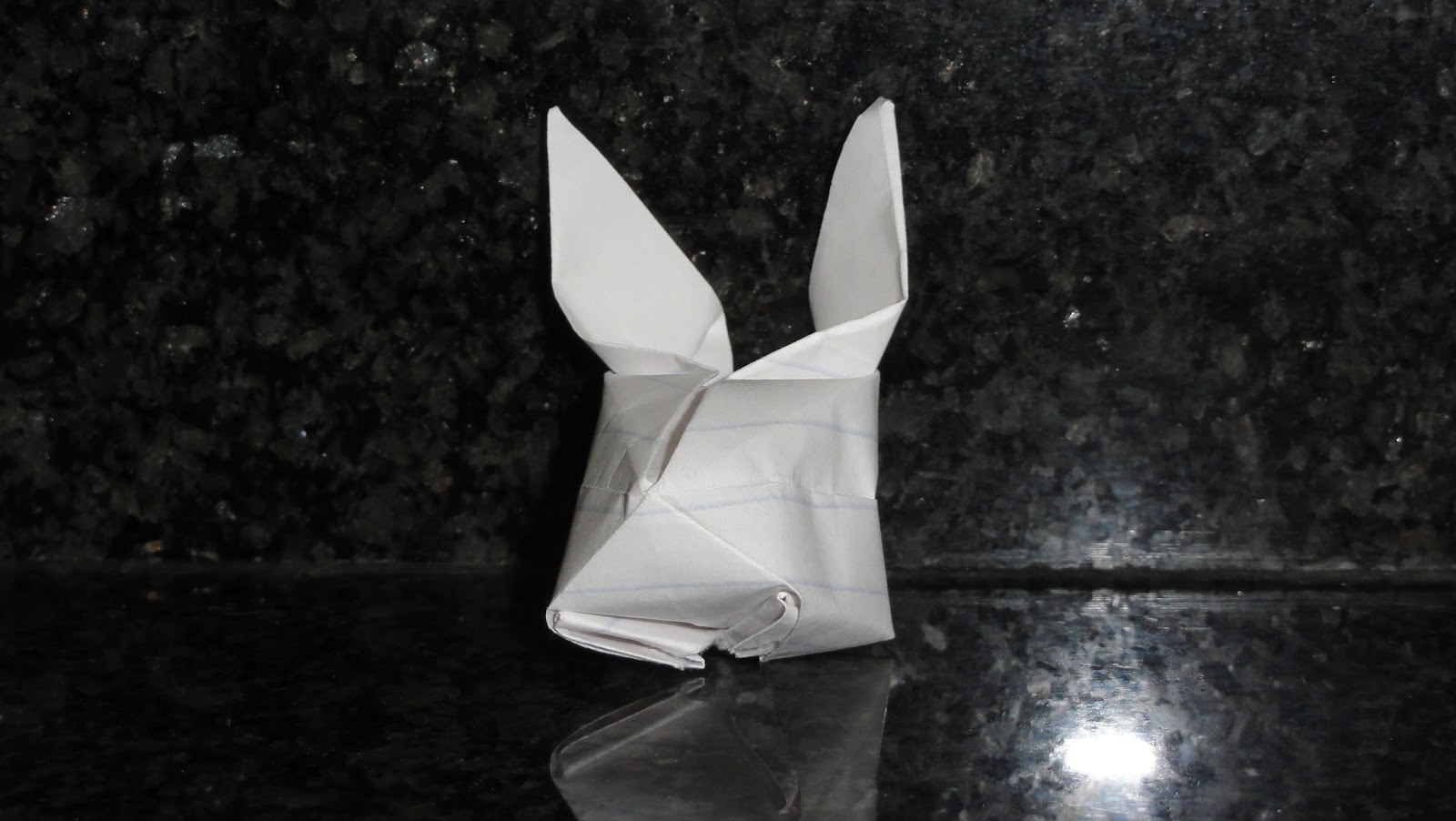
She thanked me, grinned sweetly, then presented me with this little bit of origami.  “It’s a bunny,” she said.  “I made it for you.” 

How adorable is that?  She absolutely made my day. 

Of course, I gladly accepted the bunny, and still have it sitting on my desk.  Whenever I see it, I smile, thinking of the little girl who made it and her wishes and dreams.  I can only hope the advice I gave her had half as much impact on her as her impromptu gift had on me.
Here’s a toast to up-and-coming little writers everywhere – may your pencils be sharp and your imaginations unfettered!

Tuesday, July 17, 2012

Feminist = Fine


First, she took Britain by storm. Next up, the United States.  Caitlin Moran’s mission: to blow up the nasty image feminism has acquired and to reclaim the word (and the ideology) for the people. Sort of a backlash to the backlash. And, she's a hoot (which helps).
According to Sarah Lyall of The New York Times, Moran’s book, How to Be a Woman, is “part memoir, part philosophical rant, part manifesto written with the lightest touch. . . The book aims to make women proud of being feminists.”
Moran says, “The word ‘feminism’ has for some reason gone off the rails to connote, incorrectly, preachy humorlessness and grim separatism.  When I talk to girls, they go, ‘I’m not a feminist.’  And I say, ‘What?  You don’t want to vote?  Do you want to be owned by your husband?  Do you want your money from your job to go into his bank account?  If you were raped, do you still want that to be a crime?  Congratulations:  you are a feminist.”
Check out Caitlin Moran’s website and see for yourself:  http://www.how-tobeawoman.com/


Wednesday, July 11, 2012

Texts from Jane Eyre


If you know anything about me, you know I'm crazy (well, not quite Bertha-in-the-attic-crazy, but Cocoa Puff-crazy) about Jane Eyre. What if Jane, and Rochester and St. John, were alive and well today? Well, they'd be texting, wouldn't they?
Kudos to my fellow English department professor, Heidi Lavine for unearthing this gem from the website "Hairpin" -- a rendition of what texts between Jane and Rochester and St. John would look like. Check it out. It is hilarious! (I, personally, liked the line, "But I taught you Hindi and everything. That's basically the same as getting engaged for missionaries.") What's your favorite line?


Monday, April 16, 2012

A Favorite for Voice


This superb book, by Barbara Kingsolver (1998), is an oldie, but a goodie, and, in my opinion, is the supreme novel highlighting voice.  The book is about Baptist Preacher Nathan Price who moves his wife and four daughters from Georgia to the Belgian Congo, circa post WWII, in order to try to convert the Congolese to Christianity. The book consists of alternating first-person narratives from the perspectives of all five women -- one of the few instances in literary history that a prominent male character is left voiceless. 

Rumor has it that Kingsolver spent almost two decades working on this book and wrote it five times over -- once in the voice of each of the female characters.  For each chapter, she picked the version with the character's voice she liked best and compiled the book into the stunning work that it is. 

Orleanna is the mother who is torn between obeying her husband and seeing to the health and welfare of her four daughters.  Rachel is the first born daughter, and, at fifteen is characteristically adolescent and materialistic. Leah is the idealistic twin of Adah who is developmentally delayed, and Ruth May, is the baby of the family -- an innocent five year old. The five female characters speak of their frustration and struggle as they attempt to assimilate into the world of the Congo, amid the poverty and political turmoil of the period, even as they challenge and reassess Nathan, and all that he represents with his hierarchical views about gender, race, class and religion.

A must read!  Enjoy this treasure.

Monday, April 2, 2012

Highlighted Author

I'm happy and honored, today, to be the featured author, on esteemed Charlene A. Wilson's "Highlighted Author" blog.  Stop by Wilson's blog to read up on Shame the Devil, sure, but don't stop there.  You can also explore a virtual bookshelf of other literary delights, indulge in loads of book trailers and scan little known facts about countless authors and their missives.  Enjoy finding your next great read!  


Click here to visit the website:  Highlighted Author

Take a gander at my Book Trailer:  Shame the Devil  (It's got a great song!)


Monday, March 19, 2012

Your brain on fiction . . .


You've always known it was true -- reading fiction is more than just an experience with words. It's an experience. And now, research proves that reading about sensory experiences and relationships makes the brain react as if experiencing those sensations and encounters. Fiction, apparently because of the rich use of imagery, is especially prone to producing altered brain activity -- much like a computer simulation. Not only does the brain respond to image-laden words, but it also responds to words about motion and emotion. In fact, according to a recent study, avid readers of fiction are found to better understand other people's behavior -- you're not just reading a story, you're becoming more socially astute. So, the next time you think reading a novel is just a waste of time or a mindless extravagance, think again. You're learning and growing and experiencing through the art of the written word.

To learn more about this study, check out this recent New York Times article:  Your Brain on Fiction


Friday, December 30, 2011

The "Outting" of Fanny Fern

William U. Moulton
Today I was honored to write a guest post for Rob Velella's fabulous blog, The American Literary Blog.  Of course, I wanted want to write about Fanny Fern, and Rob asked me to write about a very specific point in Fern's life, the date and circumstances when her nom de plume was no longer cloaked in anonymity and her true identity was revealed.  That date was Dec. 30, 1854.  Her nemesis?  The best guess of many scholars is that it was one of her former Boston editors, William U. Moulton, editor of Boston's True Flag.  His motive?  Check out the blog to see.  And, while you're at it, read Rob Velella's other thoughtful and informative posts about Fanny Fern and a host of other 19th-century American authors.

Click here to read more:  American Literary Blog 

*Special thanks to Rob Velella for finding the picture of Moulton.


Monday, December 26, 2011

A great blog if you love 19th-century American Literature . . .

Take a stroll through the past and get great insights about literature to boot.  I've discovered this excellent blog, by Rob Velella, a 19th-century American Literature aficionado and scholar.  Oh, the tidbits he knows!  Oh, the lessons he shares!  Oh, the writers he champions!  <cough, cough, including our own Fanny Fern>  Take a look at this fascinating and well-conceived blog when you have a chance.  He covers all the favorites and explores more than a few lesser-known authors.  And rumor has it that he's dishing about Fanny right about now, if you happen to check in. 


Thursday, December 15, 2011

"Sleigh Bells and Ink Wells" Blog Hop


Are you ready to hop?  Take this tour of 12 blogs -- some you may already know and some new ones.  It's easy.  It's fun.  It's a good Friday diversion.

*******

‘Tis the season, you know, for giving and receiving – mostly for giving, though, right?  But, what is the nature of true giving?  How does one define generosity?  Philanthropy?

As is often the case, my idol, Fanny Fern, has already written the perfect seasonal column about this very topic.  Who is Fanny Fern?  Fanny Fern (the pen name of Sara Payson Willis), was one of the most successful, influential, and popular writers of the nineteenth century. A novelist, journalist, and feminist, Fern (1811-1872) outsold Harriet Beecher Stowe, won the respect of Nathaniel Hawthorne, and served as literary mentor to Walt Whitman. Scrabbling in the depths of poverty before her meteoric rise to fame and fortune, she was widowed, escaped an abusive second marriage, penned one of the country's first prenuptial agreements, married a man eleven years her junior, and served as a nineteenth-century Oprah to her hundreds of thousands of fans. Her weekly editorials in the pages of the New York Ledger and other periodicals over a period of about twenty years chronicled the myriad controversies of her era and demonstrated her firm belief in the motto, "Speak the truth, and shame the devil."  

As part of the “Sleigh Bells and Ink Wells” Blog Hop, my blog will introduce you to the real-life writing of the heroine of my historical novel Shame the Devil.  Her typically-sarcastic June 5, 1852 article, published in Boston’s The Olive Branch, follows:


Mistaken Philanthropy

“Don’t moralize to a man who is on his back;—help him up, set him firmly on his feet, and then give him advice and means.”

There’s an old-fashioned, verdant, piece of wisdom, altogether unsuited for the enlightened age we live in; fished up, probably, from some musty old newspaper, edited by some eccentric man troubled with than inconvenient appendage called a heart!  Don’t pay any attention to it.  If a poor wretch—male or female—comes to you for charity, whether allied to you by your own mother, or mother Eve, put on the most stoical, “get thee behind me,” expression you can muster.  Listen to him with the air of a man who “thanks God he is not as other men are.”  If the story carry conviction with it, and truth and sorrow go hand in hand, button your coat up tighter over your pocket book, and give him a piece of—good advice!  If you know anything about him, try to rake up some imprudence or mistake he may have made in the course of his life, and bring that up as a reason why you can’t give him anything more substantial, and tell him that his present condition is probably a salutary discipline for those same peccadilloes!  Ask him more questions than there are in the Assembly’s Catechism, about his private history, and when you’ve pumped him high and dry, try to teach him—on an empty stomach—the “duty of submission.”  If a tear of the wounded sensibility begins to flood the eye, and a hopeless look of discouragement settles down upon the face, “wish him well,” and turn your back upon him as quick as possible.

Should you at any time be seized with an unexpected spasm of generosity, and make up your mind to bestow some worn-out old garment, that will hardly hold together till the recipient gets it home, you’ve bought him, body and soul; of course, you are entitled to gratitude of a life-time!  If he ever presumes to think differently from you after that, he is an “ungrateful wretch,” and “ought to suffer.”  As to the “golden rule,” that was made in old times; everything is changed now; it is not suited to our meridian.

People shouldn’t get poor; if they do, you don’t want to be bothered with it.  It is disagreeable; it hinders your digestion.  You would rather see Dives than Lazarus; and, it is my opinion, your taste will be gratified in that particular,—in the other world, if not in this!

--Fanny Fern


Ha!  You said it Fanny!  To learn more about Fanny Fern and my historical novel about her, click here: Shame the Devil.

To continue onto the next “Sleigh Bells and Ink Wells” blogger, the amazing Malcolm R. Campbell, click here: Malcolm’s Round Table.  From Malcolm’s site, you’ll be directed to hop to the next blog until you finish the whole short, wonderful tour of twelve blogs.  Enjoy! 

“Sleigh Bells and Ink Wells” blog hop participants are authors of small press/university press books that are eliciting discussion and notice.  Blog hoppers include:

Smoky Zeidel @ Smoky Talks

Patricia Damery @ Patricia Damery

Debra Brenegan @ Debra Brenegan, author

Malcolm R. Campbell @ Malcolm’s Round Table

T.K. Thorne @ T.K.’s Tales

Anne K. Albert @ Anne K. Albert

Elizabeth Clark-Stern @ Elizabeth Clark-Stern’s Blog

Collin Kelley @ Modern Confessional

Sharon Heath @ Sharon Heath

Melinda Clayton @ Author Melinda Clayton


Leah Shelleda @ After the Jug was Broken


Wednesday, December 14, 2011

Coming to you: Friday, Dec. 16th

You're Invited to a
"Blog Hop"

Read about new books

Read about new authors

Get ideas for your holiday gift list

Visit some new, quality blogs

Enjoy!!


Wednesday, November 30, 2011

Scandalous Women

Wow – Elizabeth Kerri Mahon, self-professed “history geek” and noted blogger of the popular website about scandalous women in history has me as guest blogger!  Click here to read my latest about Fanny Fern and to check out other amazing books recommended by Mahon.  Find out more, too, about Mahon’s well-received book, “Scandalous Women – The Lives and Loves of History’s Most Notorious Women.” 
Click on the link below to go to this site named one of the 100 Most Awesome Blogs for History Junkies by Best Colleges.com: 

Thursday, November 17, 2011

Interview!

Sketch of Fanny Fern
Today, I am honored to be interviewed on Smoky Talks Authors, a blog dedicated to showcasing emerging and small press authors. Blogger Smoky Zeidel is the author of two novels, On the Choptank Shores (formerly titled Redeeming Grace) and The Cabin, and two nonfiction books on writing. She is also the author of Observations of an Earth Mage, a collection of prose, poetry, and photographs celebrating the natural world. Smoky did an impressive job with my interview, as she does with all of her interviews. Her website provides a lovely space for “chats with small press authors about writing and books.”

To see what Smoky asked me about Fanny Fern and Shame the Devil, click this link: Smoky Talks Authors