Showing posts with label Relaxation. Show all posts

Monday, February 16, 2015

Snow Day!

It's a snow day here in Missouri!

There's something about snow days that bring out the kid in everyone -- a "free" day to spend shoveling, cooking, eating, playing.  Even though I've shared this beauty before, I must share it again.  Former U.S. Poet Laureate Billy Collins nails the essence of a snow day in his poem bearing the same title.  Enjoy!


Snow Day
By Billy Collins
Today we woke up to a revolution of snow,
its white flag waving over everything,
the landscape vanished,
not a single mouse to punctuate the blankness,  
and beyond these windows

the government buildings smothered,
schools and libraries buried, the post office lost
under the noiseless drift,
the paths of trains softly blocked,
the world fallen under this falling.


In a while, I will put on some boots
and step out like someone walking in water,

and the dog will porpoise through the drifts,  
and I will shake a laden branch
sending a cold shower down on us both.
But for now I am a willing prisoner in this house,
a sympathizer with the anarchic cause of snow.
I will make a pot of tea
and listen to the plastic radio on the counter,
as glad as anyone to hear the news


that the Kiddie Corner School is closed,
the Ding-Dong School, closed.
the All Aboard Children’s School, closed,
the Hi-Ho Nursery School, closed,
along with—some will be delighted to hear—

the Toadstool School, the Little School,
Little Sparrows Nursery School,
Little Stars Pre-School, Peas-and-Carrots Day School 
the Tom Thumb Child Center, all closed,
and—clap your hands—the Peanuts Play School. 

So this is where the children hide all day,
These are the nests where they letter and draw,
where they put on their bright miniature jackets,
all darting and climbing and sliding,
all but the few girls whispering by the fence.
 

And now I am listening hard
in the grandiose silence of the snow,
trying to hear what those three girls are plotting, 
what riot is afoot,
which small queen is about to be brought down.

Billy Collins, “Snow Day” from Sailing Alone Around the Room: New and Selected Poems (New York: Random House, 2001). Copyright © 2001 by Billy Collins.

Wednesday, February 19, 2014

ASMR = Ahhhh

Remember yourself as a child.  Now remember yourself falling asleep listening to something routine, simple, and fairly quiet – someone clipping hedges outside, the clinking sounds of dining and murmured conversation, someone taking a shower.

Remember yourself receiving a routine, enjoyable service in a quiet setting – a haircut, shoeshine, or pedicure.

Do you remember the feelings of calmness, even drowsiness?  Do you remember ever feeling a goose-bumpy tingle, for instance if the murmurs and clinks sounded just right, or if the stylist was snipping around your ear?

Calm, drowsy or tingling sensations are sometimes referred to as autonomous sensory meridian response(s), or ASMR, and are becoming a sought-after YouTube phenomenon.  In our stressed out, sleep-deprived culture, people need ways to soothe themselves in order to relax or fall asleep.  Apparently, more and more people are turning to ASMR videos for just such purposes. 
 
ASME sounds are different from white noise in that they are not flat or constant, and, of course ASMR often includes visuals as well as audios.  If you’ve never experienced ASMR “head tingles,” ASMR folks say you probably won’t experience them from ASMR videos.  But if you’ve gotten drowsy or calm, you likely can expect at least that response.  Common ASMR triggers include:  whispering/slow speech patterns/accents, lip smacking/eating sounds, scissor snipping, clicking/brushing/watery sounds, and painting/drawing/quiet instructional videos – which explains why students sometimes have ASMR responses in class – although not in my classes, EVER, of course.  J 
 
I tried out a couple of the videos – one about water marbles and one where a nice woman whispered about time travel.  I felt relaxed after these videos, but not drowsy.  I didn’t experience the head tingles that some people report, although I don’t usually get those from sounds.

Here’s just one site to try, if you’re interested:  soothetube

What do you think about ASMR?  Do you think you might try one of these videos during a bout of insomnia?  If you tried one of the videos, what was your experience? 


Monday, November 25, 2013

Take Five

Meditation.  I know, I know.  You don’t have time.  You’re too stressed.  It’s weird.  But, before you roll your eyes and zoom off to Black Friday sales, take five.  Why?  Because a recent neuroscience study reported that just five minutes of meditation a day can reduce anxiety by up to 22 percent, not to mention reducing stress levels and increasing immune function.  Just the ticket for these super-charged weeks coming up.
So, quick – how do you meditate in just 5 minutes?  First, set a timer for 5 minutes so you don’t have to worry about time.  Then follow the steps below.
Step #1:  Breathe.  Get into a comfortable position (no, you don’t have to sit cross-legged) and simply breathe in for a count of 4 and out for a count of 6.
 Step #2:  Breathe at your natural pace.  Stop counting your breaths.  Try to experience your breathing from nose to belly.
Step #3:  Stay focused on your breathing.  If random thoughts zip through your head, refocus on your breathing.  You will have the rest of the day to think.
Step #4:  Relax tight muscles by focusing your breath into tight areas.  Concentrate on typical tension zones:  jaw, neck, shoulders, stomach.
Step #5:  When the timer goes off or when you are ready to transition out of your meditation, think about something or someone in your life you are grateful for.
 
Step #6:  Tackle everything else.


Monday, November 11, 2013

Slow TV


It’s called “slow TV” and Norwegian public television, or NRK, says it just might be the next big thing.  Ratings, apparently, are good for shows that depict live log-burning (12 hours from kindling to ashes), start-to-finish steps to making a sweater (sheep shearing, spinning, knitting – the whole shebang), and the wait, wait, wait-and-see moments on a salmon fishing boat.  Programmers maintain these shows promote serenity in our harried world and let people, vicariously, experience the peacefulness of these traditionally calming experiences. 

What serene practices do you think would make for good slow TV?  Watching someone do dishes?  Meditate?  Make soup?  Run along the ocean?  Chop firewood?

Tuesday, October 1, 2013

A Spot of Tea

In our fast-paced world, we often need small rituals to help us slow down and savor the moment.  My husband and I like to start each day with a leisurely cup of tea.  If the rest of the day whizzes by, at least there will be peace each morning, if only for ten minutes.  My favorite tea is an Irish brand –  Lyon’s original blend, which my mom and I discovered during our trip to Ireland.  According to official tea-gurus, there is a definite method to tea heaven.  Follow these steps, and you, too, can make yourself the perfect cup of tea.

1. Boil the water quickly and keep it boiling for five minutes to make it softer.

2. Use a little of the boiling water to warm the pot.

3. Put your teabags or loose tea into the pot, then add the boiling water. Use two four-gram teabags to a liter of water, or one teaspoon of loose tea per cup.

4. Leave the tea to brew, but not for too long; after about five minutes, the tea can get bitter.

5. Remove the teabags and give the tea a stir to ensure a consistent taste (otherwise it will be stronger at the bottom of the pot).

6.  Pour into cups or mugs and add milk, honey or sugar, as desired.
 
What's your favorite tea?
 

Tuesday, September 17, 2013

Go get your dose of green!


To do before the leaves change:  forest bathe.
You’ve probably been forest bathing without even realizing it.  Called Shinrin-yoku in Japanese, forest bathing is an officially recognized leisure and stress management activity touted for its health benefits.  You find a wooded area.  You enter it.  You breathe deeply of the wood and leaf essences emitted by trees.  You feel better – emotionally, psychologically and physically.  Like with any aromatherapy, part of the benefit comes from deep breathing, part from stillness, and part from the essential oils themselves.  Wood essential oils, called phytoncides, are antimicrobial, not to mention, a sensory treat. 
So, quick, while you still can – go forest bathing one more time this year.  You know you want to.


Thursday, August 15, 2013

My virtual hammock


This is where I've been -- at least mentally -- for the past few months.  As I've eased into my sabbatical, I've fully immersed myself not only into uninterrupted writing time, but into some luxurious amounts of personal R&R time.  And I cannot recommend the practice enough!  Down time, my friends, is not overrated in the least, but is the necessary balance to productivity.  So, take some time to sway in your own virtual hammock, especially if you have big projects looming . . . and let me know how you fared.

Wednesday, January 30, 2013

Sick and Tired


With this horrible flu season busting everyone's chops -- not to mention the formidible plethora of colds, the myriad of other viral disorders and a healthy (unhealthy?) dose of the usual amounts of work and stress -- it is no surprise that people are dropping like flies -- into bed.  Or not.

For those of you who take nature's gentle hints (fevers, body aches, swollen sinuses, dizzying exhaustion) as permission to crawl beneath the sheets, even in the daylight -- I applaud you.  I honor you.  And I hope to be more like you in the future.  For the rest of you -- pay attention!

Too often, we (and I include myself in that reference) think we cannot be spared, that our work will never be done or our missions accomplished if we take even a second off to restore and repair our ailing, tired selves.  We must march forward, trudge onward, and fight the good fight.  Our bodies simply must cooperate with our agendas -- the agendas, of course, being written in stone with blood (or in some other such permanent manner).  That way of thinking, of course, couldn't be further from the truth.  While we all probably logically agree that the sick and the tired need rest and should, therefore, make an immediate beeline to bed, it's a lot harder to impose such logic upon ourselves.  We're really not that sick, not too tired, to stop the clock and . . . egads, waste some precious time.

But, of course, we should and we must.  I love reading the scenes in 19th-century novels where someone catches a cold and every one rushes that person to bed to sip broth and tea and drowse away several days or a week.  What luxury!  What good sense!  What a luminous goal! 

Even if you don't spend a whole week in bed everytime you sneeze, please remember that it is okay to stop and rest for the afternoon, for the weekend, or even for a longish lunch.  All of you who are sick and tired of being sick and tired . . . take to your beds -- if even for a nap -- and let nature help restore you to balance and good health.

Saturday, May 5, 2012

Virtual stroll through our Missouri gardens

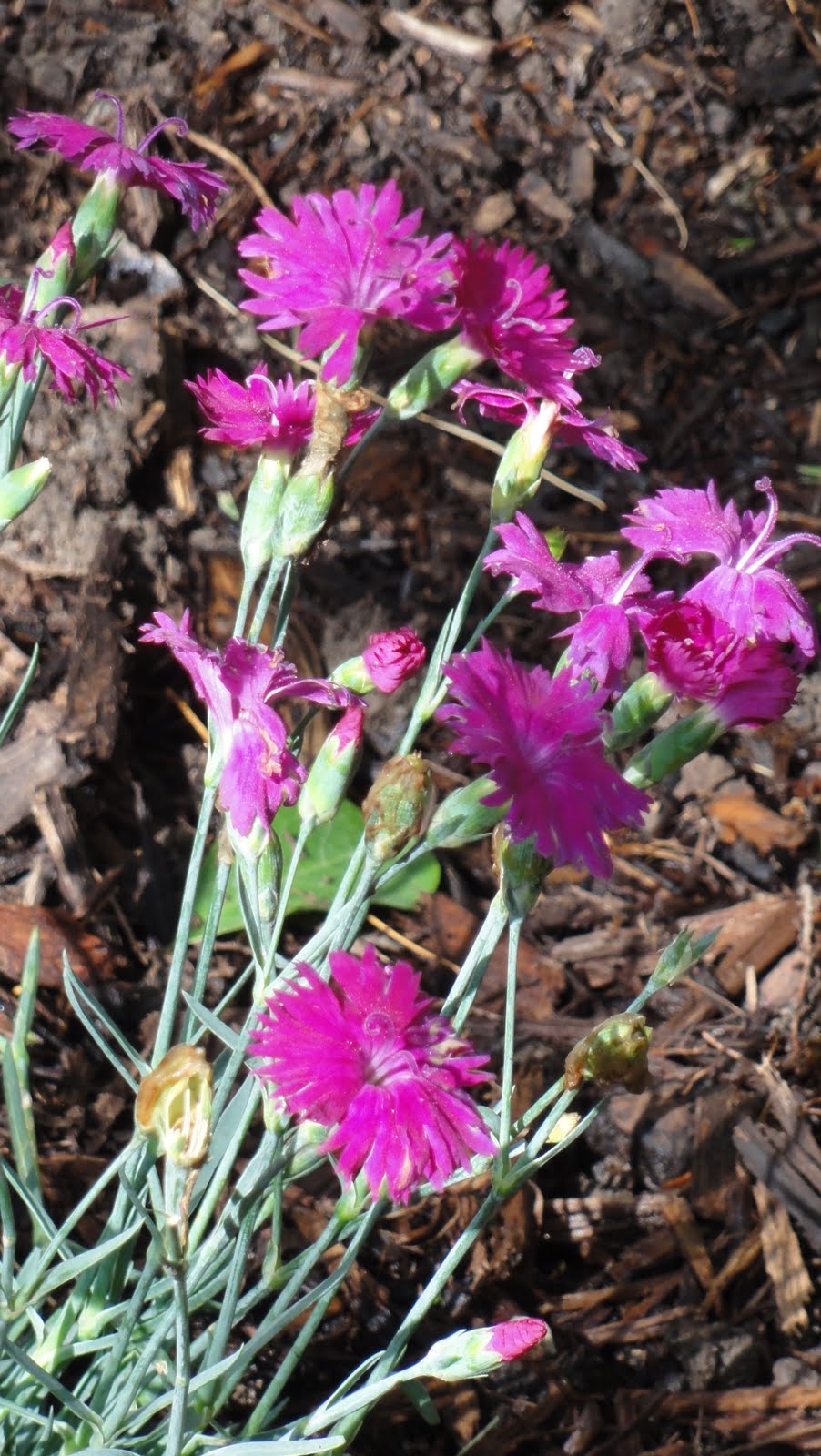
Hello, Nature-Lovers!  Welcome to our Missouri gardens.

I hope you will take a little break among our springtime plants . . .
and flowers!

Breathe.


Relax a little. 


And enjoy your virtual nature walk!


Monday, March 26, 2012

The Brain on Love

Diane Ackerman discussed the mind/body connection, again, in her New York Time Opinionator piece about interpersonal neurobiology.  Studies show what we've always known and felt -- that love heals and comforts -- for real.  Just as the pain of heartbreak is experienced as real pain in the body, the joy and peace of love is experienced there, too.  So, whether you're having a hard day or a sleepless night, get close to your loved ones.  Hear their voices, see their faces, feel their skin.  Your own brain will light up with pleasure as you feel the love.
Read all the details here:  Your Brain on Love


Thursday, December 15, 2011

"Sleigh Bells and Ink Wells" Blog Hop


Are you ready to hop?  Take this tour of 12 blogs -- some you may already know and some new ones.  It's easy.  It's fun.  It's a good Friday diversion.

*******

‘Tis the season, you know, for giving and receiving – mostly for giving, though, right?  But, what is the nature of true giving?  How does one define generosity?  Philanthropy?

As is often the case, my idol, Fanny Fern, has already written the perfect seasonal column about this very topic.  Who is Fanny Fern?  Fanny Fern (the pen name of Sara Payson Willis), was one of the most successful, influential, and popular writers of the nineteenth century. A novelist, journalist, and feminist, Fern (1811-1872) outsold Harriet Beecher Stowe, won the respect of Nathaniel Hawthorne, and served as literary mentor to Walt Whitman. Scrabbling in the depths of poverty before her meteoric rise to fame and fortune, she was widowed, escaped an abusive second marriage, penned one of the country's first prenuptial agreements, married a man eleven years her junior, and served as a nineteenth-century Oprah to her hundreds of thousands of fans. Her weekly editorials in the pages of the New York Ledger and other periodicals over a period of about twenty years chronicled the myriad controversies of her era and demonstrated her firm belief in the motto, "Speak the truth, and shame the devil."  

As part of the “Sleigh Bells and Ink Wells” Blog Hop, my blog will introduce you to the real-life writing of the heroine of my historical novel Shame the Devil.  Her typically-sarcastic June 5, 1852 article, published in Boston’s The Olive Branch, follows:


Mistaken Philanthropy

“Don’t moralize to a man who is on his back;—help him up, set him firmly on his feet, and then give him advice and means.”

There’s an old-fashioned, verdant, piece of wisdom, altogether unsuited for the enlightened age we live in; fished up, probably, from some musty old newspaper, edited by some eccentric man troubled with than inconvenient appendage called a heart!  Don’t pay any attention to it.  If a poor wretch—male or female—comes to you for charity, whether allied to you by your own mother, or mother Eve, put on the most stoical, “get thee behind me,” expression you can muster.  Listen to him with the air of a man who “thanks God he is not as other men are.”  If the story carry conviction with it, and truth and sorrow go hand in hand, button your coat up tighter over your pocket book, and give him a piece of—good advice!  If you know anything about him, try to rake up some imprudence or mistake he may have made in the course of his life, and bring that up as a reason why you can’t give him anything more substantial, and tell him that his present condition is probably a salutary discipline for those same peccadilloes!  Ask him more questions than there are in the Assembly’s Catechism, about his private history, and when you’ve pumped him high and dry, try to teach him—on an empty stomach—the “duty of submission.”  If a tear of the wounded sensibility begins to flood the eye, and a hopeless look of discouragement settles down upon the face, “wish him well,” and turn your back upon him as quick as possible.

Should you at any time be seized with an unexpected spasm of generosity, and make up your mind to bestow some worn-out old garment, that will hardly hold together till the recipient gets it home, you’ve bought him, body and soul; of course, you are entitled to gratitude of a life-time!  If he ever presumes to think differently from you after that, he is an “ungrateful wretch,” and “ought to suffer.”  As to the “golden rule,” that was made in old times; everything is changed now; it is not suited to our meridian.

People shouldn’t get poor; if they do, you don’t want to be bothered with it.  It is disagreeable; it hinders your digestion.  You would rather see Dives than Lazarus; and, it is my opinion, your taste will be gratified in that particular,—in the other world, if not in this!

--Fanny Fern


Ha!  You said it Fanny!  To learn more about Fanny Fern and my historical novel about her, click here: Shame the Devil.

To continue onto the next “Sleigh Bells and Ink Wells” blogger, the amazing Malcolm R. Campbell, click here: Malcolm’s Round Table.  From Malcolm’s site, you’ll be directed to hop to the next blog until you finish the whole short, wonderful tour of twelve blogs.  Enjoy! 

“Sleigh Bells and Ink Wells” blog hop participants are authors of small press/university press books that are eliciting discussion and notice.  Blog hoppers include:

Smoky Zeidel @ Smoky Talks

Patricia Damery @ Patricia Damery

Debra Brenegan @ Debra Brenegan, author

Malcolm R. Campbell @ Malcolm’s Round Table

T.K. Thorne @ T.K.’s Tales

Anne K. Albert @ Anne K. Albert

Elizabeth Clark-Stern @ Elizabeth Clark-Stern’s Blog

Collin Kelley @ Modern Confessional

Sharon Heath @ Sharon Heath

Melinda Clayton @ Author Melinda Clayton


Leah Shelleda @ After the Jug was Broken


Wednesday, December 14, 2011

Coming to you: Friday, Dec. 16th

You're Invited to a
"Blog Hop"

Read about new books

Read about new authors

Get ideas for your holiday gift list

Visit some new, quality blogs

Enjoy!!


Thursday, December 8, 2011

The Joys of a Hot Bath


In The Bell Jar, Sylvia Plath writes about the pleasures of a hot bath from the perspective of the novel’s narrator, Esther Greenwood.

Plath writes:

“There must be quite a few things a hot bath won’t cure, but I don’t know many of them. Whenever I’m sad I’m going to die, or so nervous I can’t sleep, or in love with somebody I won’t be seeing for a week, I slump down just so far and then I say : “I’ll go take a hot bath.”

I meditate in the bath. The water needs to be very hot, so hot you can barely stand putting your foot in it. Then you lower yourself, inch by inch, till the water’s up to your neck.

I remember the ceiling over every bathtub I’ve stretched out in. I remember the texture of the ceilings and the cracks and the colors and the damp spots and the light fixtures. I remember the tubs, too:  the antique griffin-legged tubs, and the modern coffin-shaped tubs, and the fancy pink marble tubs overlooking indoor lily ponds, and I remember the shape and sizes of the water taps and the different sort of soap holders.

I never feel so much myself as when I’m in a hot bath.

I lay in that tub on the seventeenth floor of this hotel for-women-only, high up over the jazz and push of New York, for near onto an hour, and I felt myself growing pure again. I don’t believe in baptism or the waters of Jordan or anything like that, but I guess I feel about a hot bath the way those religious people feel about holy water.

I said to myself:  “Doreen is dissolving. Lenny Shepherd is dissolving. Frankie is dissolving. New York is dissolving, they are all dissolving away and none of them matter any more. I don’t know them, I have never known them and I am very pure. All that liquor and those sticky kisses I saw and the dirt that settled on my skin on the way back is turning into something pure.”

The longer I lay there in the clear hot water the purer I felt, and when I stepped out at last and wrapped myself in one of the big, soft white hotel bath towels I felt pure and sweet as a baby.”

- From: The Bell Jar, by Sylvia Plath

I couldn’t agree more.  In fact, during this hectic season when the holidays press and the end of the year work worries loom large, schedule some quality time with your bathtub, like Sylvia Plath’s Esther Greenwood does.